At 2,758 metres, the Stelvio is the highest paved pass in the Eastern Alps and the second-highest in the whole Alpine range. It is the climb every road cyclist wants to tick off at least once, and the road Stelvio Collection was born on. This guide covers the three ways up, when the road is open and what to bring so the descent is as good as the climb.
The three climbs
Three roads lead to the top: from Prato allo Stelvio in South Tyrol, from Bormio in Valtellina and from Santa Maria in Val Müstair, on the Swiss side, over the Umbrail Pass. Figures vary slightly from source to source depending on where you start counting, so take them as a guide.
From Prato allo Stelvio: the 48 hairpins
The classic. About 24 to 25 km and roughly 1,800 metres of climbing at an average of around 7.5%, from Prato through Gomagoi and Trafoi. From Trafoi the road stacks up into the famous wall of hairpins: 48 in all, each one numbered, so you always know how many are left. It is the longest and most iconic side, and the one in all the photos.
From Bormio: tunnels and cantoniere
About 21.5 km and some 1,550 metres of climbing at an average of just over 7%, with more than 30 hairpins. The road passes the Bagni di Bormio, runs through a series of tunnels and climbs past the old cantoniere, the road keepers' houses. About 3 km from the top it meets the road coming up from Switzerland, and you share the final stretch.
From Santa Maria via the Umbrail Pass
The Swiss side, and the one closest to home for us. Around 16.5 km from Santa Maria Val Müstair at an average gradient above 8%: shorter, steeper and usually quieter. You top out at the Umbrail Pass (2,501 m), cross into Italy and join the Bormio road for the last 3 km to the summit.
Got a full day? The loop Bormio - Umbrail - Santa Maria - Prato - Stelvio - Bormio links all three sides: about 100 km and more than 3,000 metres of climbing.

When is the Stelvio open?
The road is closed in winter. It usually opens around the end of May and closes between early and mid-November, on dates the authorities on each side set in advance, always weather permitting.
- 2026 opening: all three sides reopened on 22 May 2026.
- 2026 closing: at the time of writing (October 2026) the official date has not been announced yet. In the last two years the winter closure came between early and mid-November, with the Bormio side closing first and the South Tyrol and Swiss sides a few days later, so expect early to mid-November, or earlier if heavy snow arrives first.
- 2027 reopening: indicatively late May 2027. The official date is confirmed in spring.
Even in summer the road can close for a few hours because of snow or rockfall, so check the latest road news before you set off. Every summer there are also days when the pass is closed to motor traffic and open only to bikes, such as the Stelvio Bike Day at the end of August, already set for Saturday 28 August 2027. The other car-free dates are published by the tourist boards of Bormio and the Val Venosta.
We will update this page as soon as the official dates are announced.

What to wear
The summit is high: count on 6 to 7 degrees less for every 1,000 metres you climb. On a warm day in the valley it can easily be 10 to 12 degrees cooler at the top, and then comes a descent of 16 to 25 km, depending on the side, with the wind in your face. You climb hot and descend cold, so dress for both.
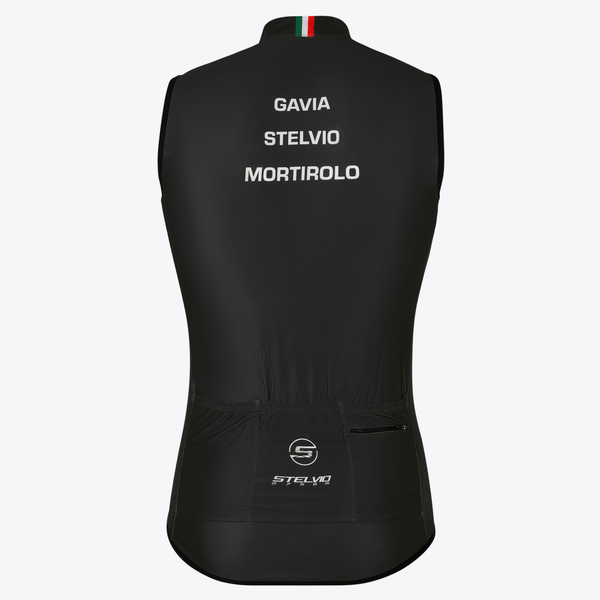
- In summer: jersey and bib shorts for the climb, plus a windproof vest and arm warmers in your back pocket. They weigh next to nothing and make the descent a different ride.
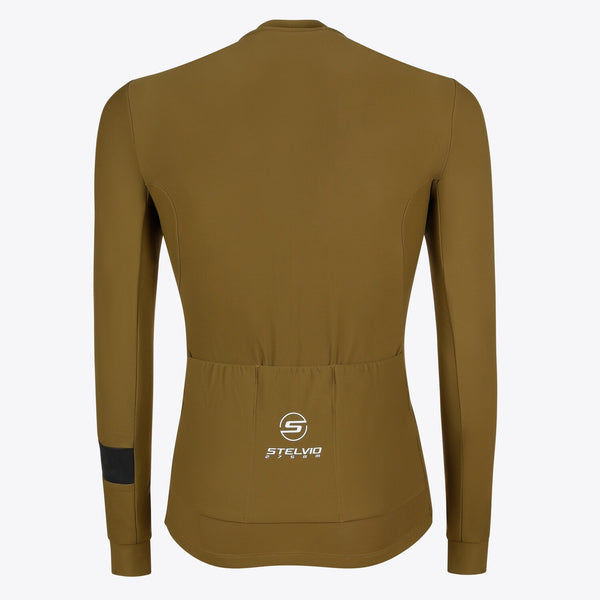
- In June and from September: there can be snow at the side of the road. Add leg warmers, long-finger gloves and a light rain shell, or go straight for a thermal jacket.
- Weather changes fast: a clear morning can turn into an afternoon storm. A packable shell is always worth the space.
Put your layers on at the top, before you start descending, not halfway down when you are already cold.

Practical tips
- Start early. Less traffic from cars and motorbikes, and you are down before the afternoon storms.
- Bring lights for the tunnels if you climb or descend on the Bormio side.
- Eat and drink before you need to. Above 2,000 metres you breathe harder and everything takes more effort. At the top you will find bars, hotels and the famous sausage stands.
- Ride your own pace. It is a long climb: the first hairpins are not the place to go into the red.
- Respect the descent. Tight hairpins, cold hands and traffic coming up: brake before the bend, not in it.
See you at 2,758 metres.